

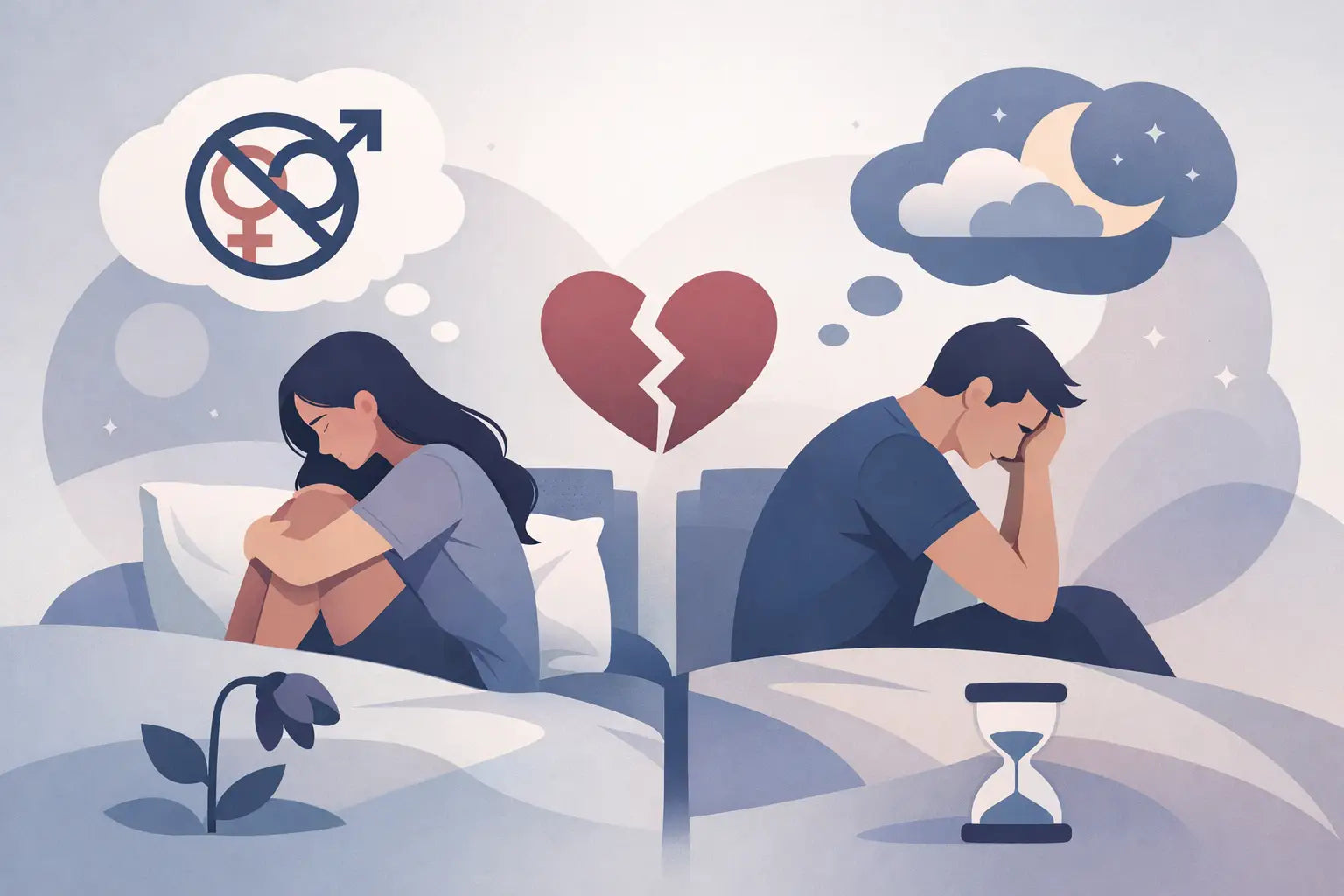
Why Don't I Want Sex Anymore?
So the World Cup is on. Kids at home are in the party mode - celebrating the wins and the loses. Fridge is full. Tables are covered with "cheering food" from juicy chicken wings to vibrant caramel popcorn.
I see the excitement but I cannot place myself into it.
This is just like many other occasions in my current life, my sex life included. At the age of 44, I do not believe I am old. But what happened to my passion? What happened to my desire?
Research suggests that 40–55% of women experience a noticeable decline in sexual desire during perimenopause, yet only about one-quarter seek professional support. Most women report that stress, fatigue, relationship dynamics, and hormonal changes all contribute to the shift rather than a single cause.
Our team at Velora recently attended a professional sexual wellness event in Toronto where licensed sex therapists discussed common concerns women face around intimacy and desire. Interestingly, many of the therapists were in a similar stage of life themselves, often in their mid-40s or older. Few opportunities offer better insight than discussing this question with professionals who support women through these concerns every day and who may also have first-hand experiences themselves.
One recurring theme from the therapists was that women often assume low libido means something is wrong with them, when in reality it is frequently a normal response to stress, caregiving demands, poor sleep, relationship dynamics, or hormonal transitions.
Jump to the FAQ
- Is it normal to lose interest in sex in your 40s?
- Can stress reduce libido?
- Will my sex drive come back?
- When should I seek professional help?
Why don't I want sex anymore? Start here
Low desire can feel sudden, but more often it builds quietly. You get busy. You feel touched out, tired, or mentally overloaded. Your body starts changing in ways you did not expect. Intimacy becomes one more thing on a very full list instead of a place where you feel restored.
That does not mean anything is broken. Sexual desire is responsive for many women, not spontaneous. In other words, you may not feel turned on out of nowhere the way you once did, especially during stressful seasons. Desire may appear after rest, emotional safety, affection, novelty, or physical stimulation, not before.
This is one reason the question can feel confusing. If you are waiting to feel instantly interested, you may assume desire is gone when it is actually buried under competing demands.
The most common reasons desire changes
According to the International Society for Sexual Medicine (ISSM) and the Journal of Sexual Medicine,
| Measure | Women | Men |
|---|---|---|
| Adults reporting some decline in sexual desire during midlife | 40–60% | 20–40% |
| Adults reporting significant distress about low libido | 10–15% | 8–12% |
| Typical age when desire changes become more noticeable | 40–55 years | 45–65 years |
| Perimenopausal women reporting reduced libido | 40–55% | N/A |
| Men reporting lower testosterone-related desire changes after age 50 | N/A | 20–30% |
| Adults reporting stress as a major contributor to low desire | 50–70% | 40–60% |
| Adults reporting sleep issues affecting sexual interest | 30–50% | 25–45% |
| Women experiencing vaginal dryness during menopause transition | 35–60% | N/A |
| Men experiencing erectile difficulties by age 60 | N/A | 30–50% |
| Adults reporting desire changes lasting longer than 12 months | 50–70% | 40–60% |
| Adults who seek professional help for sexual concerns | 20–35% | 15–30% |
| Adults who report improvement after treatment or lifestyle changes | 60–80% | 60–80% |
For women in their late 30s, 40s, and 50s, libido shifts are often linked to real life, not personal failure. Stress is a major factor. When your nervous system is focused on work, caregiving, household logistics, or relationship tension, erotic energy rarely gets first priority. The body is not being difficult. It is being protective.
Sleep matters just as much. Ongoing fatigue affects mood, patience, hormone regulation, and physical sensitivity. If you are exhausted, sex can feel less appealing not because you do not love your partner, but because your body wants recovery more than stimulation.
Hormonal changes also play a significant role. Perimenopause can bring lower estrogen, fluctuating testosterone, vaginal dryness, changes in arousal, sleep disruption, and mood swings. Many women think they have simply lost interest, when part of the issue is that intimacy has become less comfortable or less predictable. If sex starts to feel irritating, pressured, or disconnected from pleasure, your body may begin avoiding it before your mind fully understands why.
Medication can be another piece of the puzzle. Some antidepressants, blood pressure medications, hormonal birth control, and other prescriptions can affect libido or arousal. So can untreated thyroid issues, depression, anxiety, and chronic pain.
Then there is the emotional landscape. Resentment, feeling unseen, body image shifts, grief, and major life transitions all affect desire. Many women are not just asking for more libido. They are asking for a way back to feeling like themselves.
When relationship dynamics are part of it
Sometimes the question is not why don't I want sex anymore, but why don't I want the version of sex we have been having. That distinction matters.
Long-term relationships are tender ecosystems. If intimacy has become routine, rushed, or overly goal-focused, desire can fade. If you feel pressure to perform, to respond on cue, or to want sex in the same way you did years ago, your body may resist. This is especially true if affection outside the bedroom feels scarce or if sex has become the only time closeness is expected.
For some couples, the issue is not conflict but overfamiliarity. Predictability can feel safe, but it can also become flat. Desire often needs space for anticipation, curiosity, or a different kind of attention. That does not require dramatic reinvention. Sometimes it means slowing down, widening the definition of intimacy, and letting pleasure be less scripted.
It can also help to notice whether you feel emotionally pursued only when sex is on the table. Many women need connection that is not transactional. A lingering kiss, genuine appreciation, and touch without pressure can do more for desire than a perfectly timed invitation.
Your body may be asking for a different approach
If your libido has changed, forcing yourself rarely helps. It usually creates more tension, more self-criticism, and less trust in your own body. A gentler question is often more useful: what would help me feel safe, present, and receptive right now?
That answer may be surprisingly unglamorous. More sleep. Less multitasking. Time alone. Lubrication. A slower pace. A conversation you have been avoiding. Permission not to rush toward intercourse. Desire often returns when the body stops bracing.
Physical comfort matters more than many women realize. If penetration feels dry, tight, or irritating, your body will naturally begin associating intimacy with discomfort. This is not a mindset problem. It is valuable information. Support from a medical provider can help, especially if vaginal dryness, pelvic pain, or hormonal changes are involved.
And if touch has started to feel unfamiliar, solo exploration can be a quiet way back. Not as homework, and not as a performance goal. Just a chance to reconnect with sensation on your own terms. At Velora Intima, we believe intimacy tools can support that process when they are chosen with care, comfort, and emotional readiness in mind.
For some women, that means choosing a simple, unintimidating tool that prioritizes comfort over intensity. Products such as Velora Intima's Makeup Sponge were designed with discretion, medical-grade silicone, and ease of use in mind. The goal is not to chase a particular outcome, but to create a low-pressure opportunity to rediscover what feels pleasurable and responsive in your body today.
If intimacy has started to feel unfamiliar, gentle self-exploration can sometimes help rebuild confidence, curiosity, and connection with sensation at your own pace.
Explore the Makeup Sponge: Makeup Sponge by Velora Intima
What to do if you want to reconnect with desire
Start by removing the pressure to "fix" yourself quickly. Desire tends to open under kindness, not scrutiny. If you are partnered, be honest without being harsh. You do not need a dramatic speech. A simple truth is enough: I want us to feel close, but I think my body needs a different pace right now.
From there, focus on conditions instead of outcomes. Rather than aiming for a certain level of libido by a deadline, pay attention to what makes you feel more available to pleasure. Maybe that is an earlier bedtime, less wine, more affectionate touch, or more time spent feeling attractive in your own skin rather than immediately trying to be sexual.
It may also help to broaden intimacy beyond intercourse. Sensual touch, massage, kissing, shared showers, and lying together without a goal can rebuild trust in your body and in your relationship. For many women, desire returns through layered experiences, not instant heat.
Novelty can help too, but only if it feels inviting rather than performative. Newness might be as simple as changing the setting, trying a body-safe lubricant, introducing a sensory element, or talking about what you miss, want, or feel curious about. The point is not to become someone else. It is to make room for the version of you that exists now.
When to talk to a professional
If low desire is causing distress, if sex has become painful, or if the change feels significant and persistent, it is worth speaking with a healthcare provider. This is especially true if you suspect perimenopause, are dealing with mood changes, or started a new medication around the same time your libido shifted.
A good provider can help rule out underlying issues and talk through options without reducing everything to age or stress. In some cases, a pelvic floor therapist, menopause specialist, or sex therapist may be the most useful support. You deserve care that takes your experience seriously.
Emotional support matters too. If shame is part of the story, healing may begin with language. You are not frigid, failing, or selfish. You are a person with a body that responds to context. That is not a flaw. It is wisdom.
If you feel guilty about not wanting sex
Guilt can quietly make everything harder. It can lead you to agree to intimacy you do not really want, which often creates more distance over time. Wanting less sex than you used to does not make you a bad partner. It means something in your internal or relational environment needs attention.
The goal is not obligation. It is connection that feels mutual, respectful, and alive. Sometimes that starts with naming what is true without apology. Sometimes it starts with rest. Sometimes it starts with grieving that your body or relationship feels different than it once did.
Different does not have to mean worse. It may simply mean you need a more intentional way back to yourself.
If you have been asking why don't I want sex anymore, try hearing the question less as an accusation and more as an invitation. Your body may not be shutting down. It may be asking for care, honesty, and a version of intimacy that truly fits this season of your life.
FAQ
Is it normal to lose interest in sex in your 40s?
Yes. Research suggests that many women experience changes in sexual desire during perimenopause and midlife due to hormonal shifts, stress, sleep disruption, caregiving responsibilities, and relationship dynamics.
Can stress reduce libido?
Absolutely. Chronic stress can shift the body's focus toward survival and recovery, making sexual desire less accessible.
Will my sex drive come back?
For many women, desire returns when underlying factors such as stress, sleep, hormonal symptoms, or relationship concerns are addressed.
When should I seek professional help?
Consider speaking with a healthcare professional if low desire is causing distress, persists for several months, or is accompanied by pain, vaginal dryness, mood changes, or other symptoms.
Velora Knowledge Harbour
| Situation | Consider Professional Support If... |
|---|---|
| Duration | Symptoms persist longer than 6–12 months |
| Emotional impact | You feel distressed, frustrated, ashamed, or disconnected |
| Relationship impact | Desire changes are creating conflict or avoidance |
| Physical symptoms | Pain during sex, vaginal dryness, erectile difficulties, pelvic discomfort |
| Hormonal concerns | Symptoms coincide with perimenopause, menopause, low testosterone, or thyroid changes |
| Mental health | Depression, anxiety, chronic stress, or burnout are present |
| Medication changes | Libido declined after starting a new medication |
| Sudden change | Sexual desire drops abruptly without an obvious explanation |
| Age Group | Typical Sexual Desire Pattern |
|---|---|
| 20–29 | Generally highest average desire levels, though highly variable |
| 30–39 | Desire often influenced by career demands, parenting, and relationship stress |
| 40–49 | Hormonal fluctuations begin affecting many women; stress often peaks |
| 50–59 | Menopause-related changes become more common; desire becomes more responsive than spontaneous |
| 60–69 | Wide variation; many adults remain sexually active and satisfied |
| 70+ | Desire often becomes more dependent on health, intimacy quality, and comfort rather than hormone levels alone |
Sources
The North American Menopause Society (NAMS), the International Society for Sexual Medicine (ISSM), the Journal of Sexual Medicine, the Cleveland Clinic, the Mayo Clinic, and peer-reviewed studies published between 2019–2025.
Explore Your Kind of Comfort
At Velora Intima, we redefine intimacy through wellness, education, and empowerment. From everyday essentials to adventurous exploration and refined luxury, our thoughtfully designed collections create safe, elegant, and empowering spaces for self-discovery and connection.


Read more

Can masturbation support mood, sleep and sexual comfort during menopause? Here is what emerging research suggests and what it cannot yet prove.
This guide provides a comprehensive and encouraging roadmap for beginners looking to purchase their first sex toy, emphasizing that taking charge of one's sexual health can lead to greater happines...