

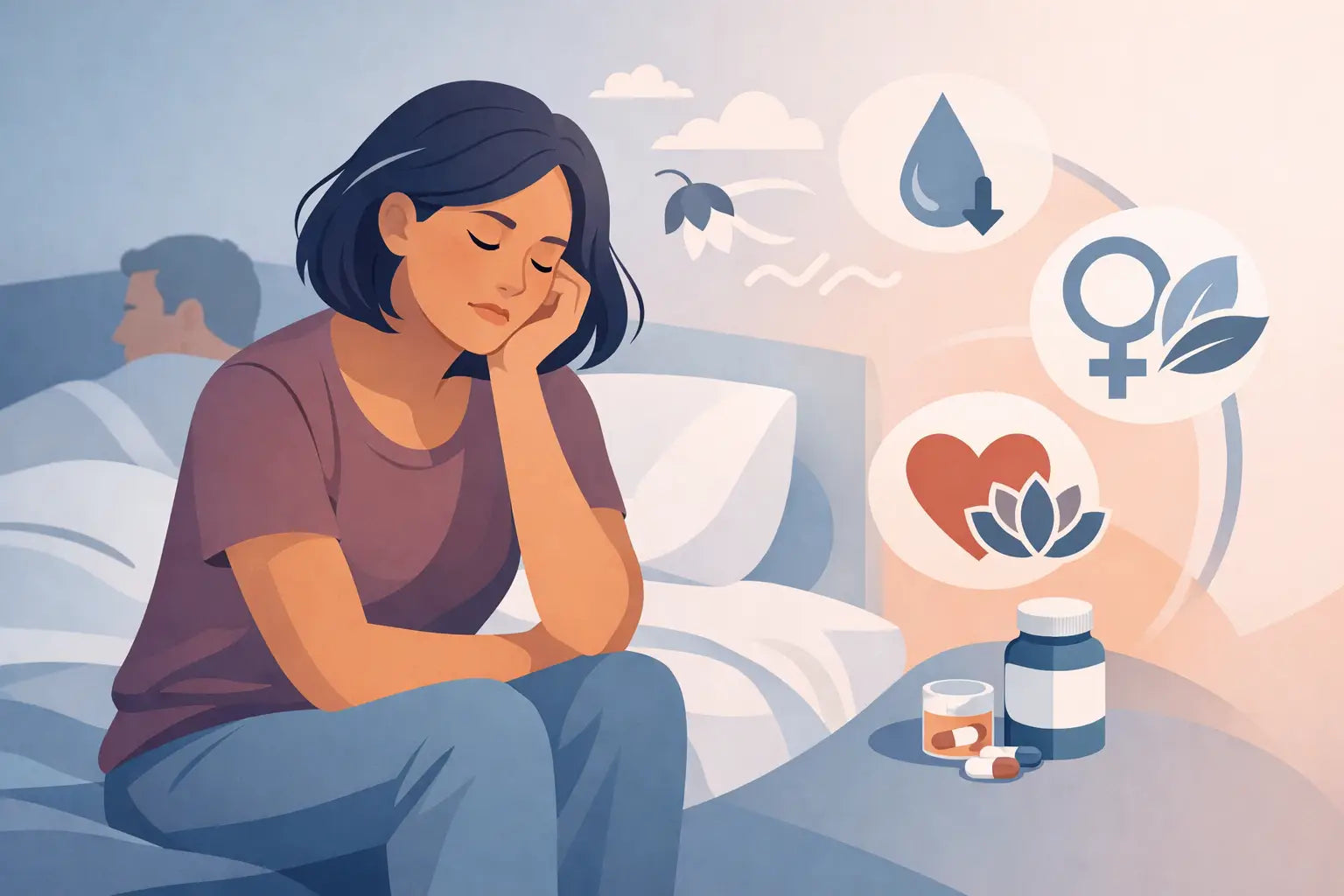
Low Libido During Perimenopause: What Helps
"One of the most common misconceptions I see is that women think they've lost their sexuality during perimenopause," says Dr. Kelly Casperson. "In reality, their bodies are changing, and the pathway to desire often changes with them."
Some women notice it all at once. Desire that used to arrive easily now feels distant, inconsistent, or simply absent. If you are experiencing low libido during perimenopause, you are far from alone, and you are not broken. This stage can change how your body responds, how your mind settles into intimacy, and what you need in order to feel open to pleasure.
That shift can be confusing, especially if you still love your partner, still value closeness, and still want to feel like yourself. But libido is not a fixed trait. It is influenced by hormones, stress, sleep, body comfort, relationship dynamics, and emotional safety. During perimenopause, many of those layers change at once.
Why low libido during perimenopause happens
Perimenopause is the transitional phase before menopause, and it can begin years before your periods stop completely. Estrogen and progesterone fluctuate, and testosterone can also shift. Those changes affect far more than your cycle.
For some women, declining estrogen leads to vaginal dryness, irritation, or increased sensitivity that makes intimacy feel less inviting. Arousal may take longer. Orgasms can feel different. If your body starts to associate intimacy with discomfort, desire often quiets down in response.
Hormones are only part of the story. Midlife often arrives with real pressure - demanding work, aging parents, teens or young adults at home, relationship stress, poor sleep, and a nervous system that rarely gets a chance to soften. Desire does not tend to thrive in depletion. If your body is carrying too much stress, it may not have much room left for erotic energy.
There is also the emotional side of perimenopause. You may feel less at ease in your skin, less rested, or less predictable in your mood. That does not mean intimacy is over. It means the conditions that support desire may need more care than they once did.
What sex therapists are seeing in practice
At a Toronto sexual wellness event attended by more than 50 licensed sex therapists in 2026, Velora asked clinicians what they believed women most often misunderstand about desire during perimenopause. A common theme emerged: many women assume declining libido is caused entirely by hormones, when in reality stress, exhaustion, relationship dynamics, body image concerns, sleep disruption, and physical discomfort often play equally important roles.
Several therapists noted that women frequently interpret changing desire as a personal failure or a sign that intimacy is ending. In practice, they observed that many women continue to enjoy intimacy once they feel relaxed, comfortable, and emotionally connected. The challenge is often creating the conditions that allow desire to emerge rather than expecting it to appear spontaneously.
These observations align with research showing that sexual wellness during perimenopause is influenced by both biological and psychological factors. While hormones matter, desire is rarely driven by hormones alone.
The data highlights an important reality: low libido and changes in sexual comfort are among the most common experiences of perimenopause. While many women assume they are alone in these challenges, research consistently shows that sexual changes affect a large proportion of women during the transition. The encouraging news is that most women who seek support—whether through education, lifestyle changes, medical care, or sexual wellness tools—report meaningful improvements.
What low libido can look like
Low libido does not always mean you never want sex. Sometimes it shows up as fewer spontaneous thoughts about intimacy. Sometimes you still enjoy closeness once it begins, but you rarely initiate it. Sometimes desire is present, but only when you feel relaxed, unrushed, and deeply connected.
That distinction matters because many women think something is wrong when they stop feeling instant, automatic desire. In reality, responsive desire is common, especially during perimenopause. You may not feel turned on before intimacy begins, but you may become interested once affection, touch, or emotional connection starts to build.
If that sounds familiar, it can help to stop measuring your libido against an earlier version of yourself. The question is not whether desire looks the same as it did at 32. The question is what helps it feel possible now.
Start with body comfort, not pressure
When intimacy feels physically uncomfortable, desire often drops for good reason. Vaginal dryness, tissue sensitivity, and pelvic tension can make even wanted touch feel less appealing. That is not a mindset problem. It is useful information.
A high-quality lubricant can make a meaningful difference, particularly if friction has started to feel irritating rather than pleasurable. For some women, vaginal moisturizers or prescription support from a healthcare provider are also part of the answer. If pain, burning, or persistent dryness are part of the picture, it is worth bringing that into a medical conversation. You deserve support that is practical, not dismissive.
It can also help to widen your definition of intimacy. Penetration does not have to be the center of the experience. Many couples find that when pressure eases, pleasure becomes easier to access again. Slower touch, extended kissing, massage, external stimulation, and a more generous pace can help your body feel invited rather than expected to perform.
The mental load is part of libido too
Desire is often treated like a physical switch, but for many women it is deeply connected to mental space. If you are moving from meetings to errands to caregiving to late-night cleanup, there may be no clear bridge into sensuality. Your body cannot always shift from responsibility to receptivity on command.
That is why reducing friction around intimacy can matter as much as anything hormonal. Some couples benefit from being more intentional about timing. That may not sound especially romantic, but neither is waiting for a perfect spontaneous moment that never comes. Anticipation can be its own kind of pleasure when it removes the pressure of unpredictability.
Ritual helps too. A shower, softer lighting, skincare, music, five quiet minutes alone - small cues can signal to your nervous system that you are leaving task mode and returning to yourself. This is not about performance. It is about making room for sensation.
Relationship dynamics can amplify low libido during perimenopause
Even loving relationships can get strained when desire changes. One partner may feel rejected, while the other feels pressured, guilty, or misunderstood. Over time, that tension can make intimacy feel emotionally loaded before it even begins.
Honest conversation helps, especially when it is framed with care. Instead of saying no in a way that shuts the door, it can be more connecting to explain what is happening. You might say that your body has changed, that stress is affecting you, or that you need more time and gentleness to get there. This invites partnership instead of defensiveness.
It also helps to talk about intimacy outside the bedroom. If every conversation happens in the moment, when one person wants more and the other feels ambushed, it is harder to be open. Calm, low-stakes conversations often lead to better solutions. You may find that what you need is not less intimacy, but a different pathway into it.
What can help you reconnect with desire
There is rarely one fix for low libido during perimenopause because there is rarely one cause. Most women benefit from a combination of physical support, emotional honesty, and permission to change their script.
If you have been waiting to feel instantly in the mood, try starting smaller. Focus on whether you feel open to closeness rather than certain of desire. Warm touch can create momentum. So can privacy, novelty, and less goal-oriented intimacy.
Solo exploration can also be useful, not as a replacement for partnership but as a way to learn what your body responds to now. Many women find that gentle, external stimulation becomes more important during perimenopause as arousal patterns shift. Products designed specifically for comfort and ease of use can help remove pressure and support rediscovery. The Heart Vibrator has received particularly strong feedback from perimenopausal customers, who frequently describe it as both exceptionally comfortable to hold and surprisingly powerful despite its elegant design. For women experiencing longer arousal times, reduced sensitivity, or inconsistent desire, external stimulation tools like the Heart can provide a low-pressure way to reconnect with pleasure and learn what feels good in this new stage of life. During perimenopause, the kind of touch you prefer may shift. Pressure, rhythm, texture, and pacing may all feel different than they once did. Thoughtfully designed, body-safe pleasure tools can support that rediscovery with less guesswork and more comfort, especially if arousal takes longer or you want more consistent external stimulation.
For some women, this is also the moment to speak with a healthcare provider about broader symptoms. If low libido is arriving alongside severe sleep issues, mood changes, hot flashes, dryness, or pain, a more complete treatment plan may help. Hormone therapy, medication review, pelvic floor therapy, or counseling can all be relevant depending on the situation. It depends on your symptoms, health history, and what feels aligned for you.
When to seek extra support
A temporary dip in desire is common. But if low libido feels distressing, persistent, or tied to pain, it deserves attention. The same is true if intimacy has become a source of conflict or if you feel disconnected from yourself in ways that go beyond sex.
Support can come from different places. A menopause-informed physician can help assess hormonal and physical factors. A pelvic health specialist can help when tension or discomfort is involved. A therapist, especially one familiar with relationships or sexual wellness, can help untangle shame, pressure, and identity shifts that often surface in this season.
There is strength in getting support before frustration hardens into avoidance. You do not have to wait until things feel severe.
A more compassionate way to think about libido
Libido is often spoken about as if it should be effortless, constant, and easy to measure. Real life is rarely that tidy. Desire changes with health, hormones, age, stress, and the quality of your connection to yourself. Perimenopause simply makes those truths harder to ignore.
What matters most is not forcing your body back into an old pattern. It is learning how to listen to what feels good now, what makes you feel safe, and what helps you return to pleasure without pressure. Sometimes the path back begins with a conversation. Sometimes it begins with better lubrication, more rest, or a slower kind of touch. Sometimes it begins with allowing your sexuality to evolve rather than assuming it has disappeared.
You are allowed to want intimacy that feels gentler, smarter, and more attuned to the woman you are now. That is not less desire. It is desire asking for a different invitation.
FAQ
Frequently Asked Questions About Perimenopause and Sexual Wellness
How common is vaginal dryness during perimenopause?
Research suggests that approximately 35% to 60% of women experience vaginal dryness during perimenopause. Hormonal fluctuations, particularly declining estrogen levels, can reduce natural lubrication and increase sensitivity or discomfort during intimacy.
How many women experience low libido during perimenopause?
Studies estimate that between 40% and 55% of women report reduced sexual desire during the perimenopausal transition. Changes in hormones, sleep quality, stress levels, and physical comfort can all contribute to decreased libido.
Is painful intercourse common during perimenopause?
Yes. Research indicates that approximately 20% to 45% of women experience painful intercourse during perimenopause. Vaginal dryness, tissue changes, and pelvic floor tension are among the most common contributing factors.
How long does perimenopause typically last?
Perimenopause typically lasts between four and eight years, although the duration varies from person to person. Some women experience a shorter transition, while others may experience symptoms for a decade or longer.
How long can low libido last during perimenopause?
Research suggests that approximately 60% of women who experience libido changes report symptoms lasting longer than 12 months. The duration often depends on hormonal changes, stress levels, relationship factors, and treatment approaches.
Do most women seek treatment for perimenopause symptoms?
Not always. Studies suggest that only about 25% to 35% of women seek medical or therapeutic support for symptoms related to perimenopause and sexual wellness, despite many experiencing significant changes.
How many women use lubricants or vaginal moisturizers during perimenopause?
Research indicates that approximately 30% to 40% of women regularly use lubricants or vaginal moisturizers to improve comfort and reduce vaginal dryness during intimacy.
Can treatment improve low libido and sexual wellness during perimenopause?
Yes. Research suggests that 60% to 80% of women report meaningful improvement after implementing treatment strategies such as lifestyle modifications, pelvic health interventions, counseling, hormone therapy, lubricants, moisturizers, or other evidence-based approaches.
What is the most important thing to know about sexual changes during perimenopause?
Sexual changes during perimenopause are common and do not mean intimacy is over. Many women experience shifts in desire, arousal, lubrication, and comfort, but most can improve their sexual well-being through education, communication, appropriate treatment, and self-exploration.
| Finding | Research Estimate |
|---|---|
| Vaginal dryness during perimenopause | 35–60% |
| Reduced libido | 40–55% |
| Painful intercourse | 20–45% |
| Average perimenopause duration | 4–8 years |
| Libido changes lasting >12 months | ~60% |
| Seek medical support | 25–35% |
| Use lubricants/moisturizers | 30–40% |
| Report improvement with treatment | 60–80% |
Sources: The North American Menopause Society (NAMS), Journal of Sexual Medicine, Mayo Clinic, Cleveland Clinic, and peer-reviewed menopause research published between 2019–2025.
Medical Disclaimer: This article is for educational purposes only and should not be considered medical advice. Readers should consult a qualified healthcare professional regarding symptoms, treatment options, or concerns related to perimenopause and sexual health.
At Velora Intima, we redefine intimacy through wellness, education, and empowerment. From everyday essentials to adventurous exploration and refined luxury, our thoughtfully designed collections create safe, elegant, and empowering spaces for self-discovery and connection.


Read more
Intimacy during perimenopause can change in real ways. Learn what helps with desire, dryness, comfort, communication, and confidence.

Can masturbation support mood, sleep and sexual comfort during menopause? Here is what emerging research suggests and what it cannot yet prove.