


Perimenopause, Menopause, and Masturbation
Can masturbation support mood, sleep and sexual comfort during menopause? Here is what emerging research suggests and what it cannot yet prove.
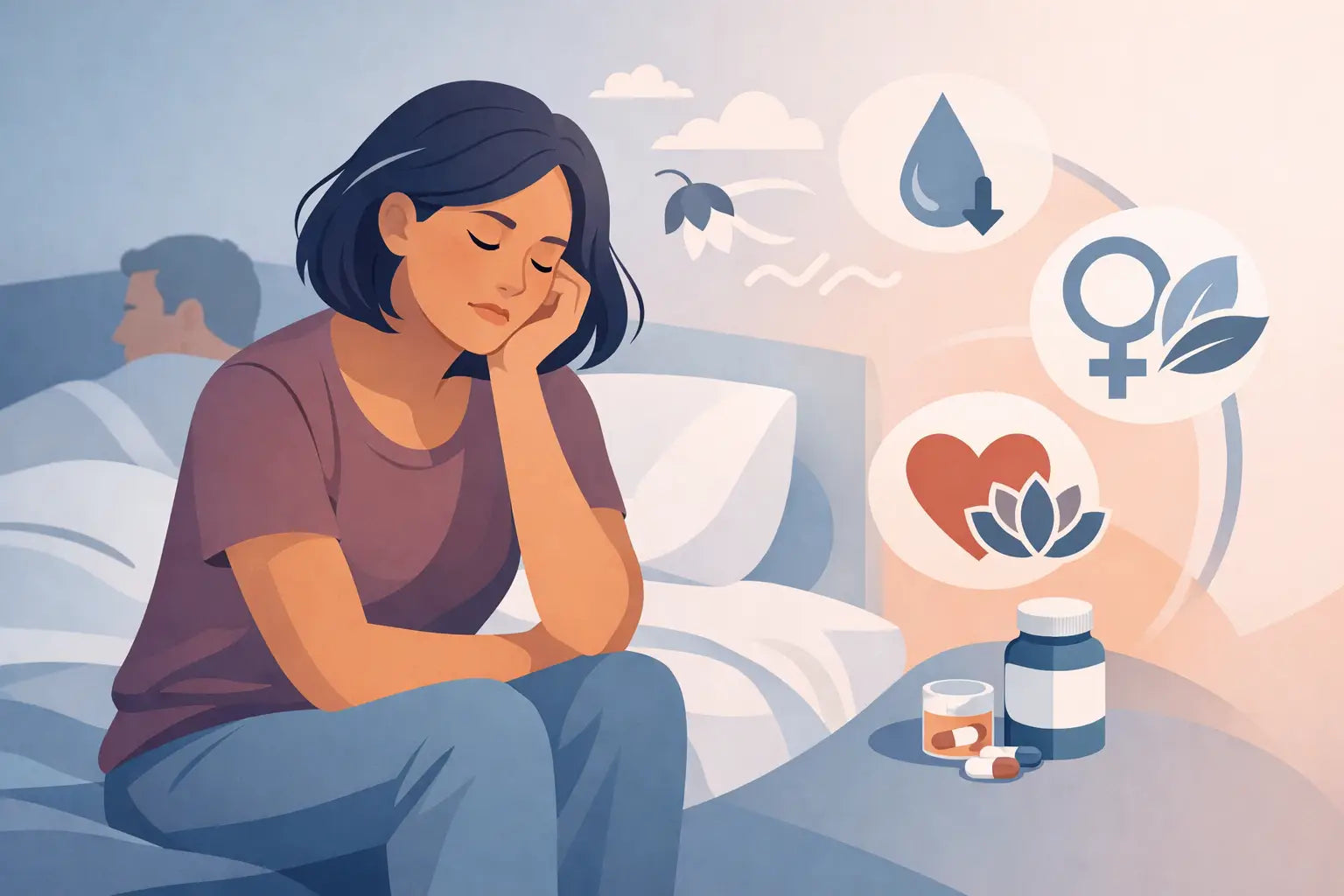
Joint pain. Fatigue. Brain fog. Anxiety. Poor sleep. Vaginal dryness. Low libido.
For many women, perimenopause and menopause can feel like a relentless series of changes happening all at once. By the time a woman reaches her late 40s or early 50s, she may be balancing a demanding career, children, aging parents, financial responsibilities, relationship pressures, and her own changing body.
When symptoms become overwhelming, most conversations focus on hormone therapy, supplements, exercise, nutrition, sleep hygiene, or stress management.
But there is another question that rarely gets asked:
Can masturbation help menopause symptoms ?
While self-pleasure is certainly not a replacement for medical care, emerging research suggests it may offer meaningful benefits for some women experiencing perimenopause and menopause. Yet despite emerging evidence, it remains one of the least discussed topics in women’s healthcare.
Jump to the FAQ
- Can masturbation relieve menopause symptoms?
- Can masturbation improve sleep during menopause?
- Can masturbation help vaginal dryness?
- Is it normal to masturbate more during perimenopause?
- Is it normal to masturbate less during menopause?
- What if I have no interest in sex anymore?
- Can a vibrator help menopause?
- Can masturbation replace hormone therapy?
- Is masturbation safe during menopause?
- Why don’t healthcare providers talk about masturbation more often?
Why This Conversation Matters
As someone navigating midlife myself, I find it fascinating that we are comfortable discussing hot flashes, insomnia, brain fog, hormone therapy, supplements, and exercise plans. Yet many women still hesitate to ask a simple question about maintaining their sexual health after 40:
Could sexual pleasure help me feel better?
At a recent sexual health and wellbeing event in Toronto, I expected therapists to spend most of their time discussing communication, relationships, and education. They did. But what surprised me was how often the conversation returned to silence.
Not silence between therapists. Silence between women and the healthcare system.
Again and again, discussions touched on topics that many women experience but few openly discuss: changes in desire, difficulties with arousal, vaginal discomfort, relationship strain, and the role of sexual wellbeing during menopause. Even among professionals who discuss sexuality every day, masturbation remained one of the least openly discussed tools for supporting sexual wellbeing.
That silence matters.
Emerging research suggests that masturbation during menopause may help some women manage stress, improve sleep, support vaginal health, and maintain sexual function. Yet only a small percentage of women report ever discussing masturbation with a healthcare provider, despite many saying they would be willing to consider it if their clinician recommended it.
This article is not about replacing hormone therapy, medication, counselling, or medical care. It is about asking whether a safe, accessible, low-cost practice that many women already engage in deserves a more meaningful place in the conversation about menopause and quality of life.
What the Research Says About Menopause and Masturbation
A study published in Menopause1 by the Kinsey Institute at Indiana University and funded by Womanizer, a sexual wellness company, explored whether masturbation plays any role in relieving symptoms associated with menopause.
This study surveyed 1,178 women aged 40 to 65 across the United States and examined how women were managing menopause symptoms and whether those approaches were helpful.
The findings were intriguing. According to this study, specific positive effects of masturbation were further grouped into the following categories: improved mood (42.8%), enhanced feelings of sexual desire and pleasure (13.1%), improved sleep (12.5%), improved vaginal lubrication (10.8%), pain relief (7.7%), reduction in hot flashes (2.7%), and other positive impacts.
Many women reported relief associated with masturbation, yet very few had ever discussed the topic with a healthcare provider.
Another report2 from the Kinsey Institute involving approximately 1,500 women aged 40 to 65 found that more than 36% of menopausal women reported that menopause and masturbation intersected in a positive way, explicitly noting that self-pleasure helped relieve menopause-related symptoms.
A small study of 96 menopausal women3 found that those who remained sexually active, either through partnered sex or solo sexual activity, reported fewer menopause symptoms, including:
- Vaginal dryness
- Sleep disturbances
- Anxiety
- Hot flashes
- Sexual discomfort
Women who remained sexually active also reported improvements in arousal, lubrication, orgasm, and overall sexual function.
These studies do not prove that masturbation or sexual activity causes symptom improvement. However, they do suggest that proactive sexual activity may be one of several lifestyle factors that contribute positively to overall sexual wellness during perimenopause and beyond.
Why Masturbation Might Help
The biological explanations are surprisingly straightforward.
Feel-Good Neurochemicals
According to Dr. Sarah de la Torre, a board-certified OB-GYN quoted in The Zoe Report4 , the connection between masturbation and menopause symptoms may be partly explained by physiology. Dr. de la Torre explains menopause is often accompanied by declining estrogen and progesterone levels, which can contribute to sleep disruption, mood changes, anxiety, and increased stress. The release of dopamine and serotonin during sexual pleasure may help some women feel calmer, more relaxed, and better able to fall asleep.
As cited by Yahoo! Health5 , research shows that approximately 27% of women in their 40s, 50s, and 60s report masturbating to relieve stress or anxiety, while about 18% say they use masturbation to help them sleep.
Blood Flow and Vaginal Health
As estrogen levels decline, vaginal tissues often become thinner, less elastic, and more prone to dryness and irritation. Regular sexual activity increases blood flow to the genital tissues, helping maintain oxygenation, elasticity, and tissue health.
According to a position statement published by the North American Menopause Society 6 , approximately 27% to 84% of postmenopausal women experience symptoms of genitourinary syndrome of menopause (GSM), including:
- Vaginal dryness
- Burning
- Irritation
- Pain during intercourse
While masturbation is not a treatment for GSM, increased blood flow may help support vaginal tissue health and comfort.
Pelvic Floor Function
A study of women7 with pelvic floor disorders found an association between stronger pelvic floor muscles and higher rates of sexual activity. Researchers speculate that arousal and orgasm-related muscle contractions may contribute to maintaining pelvic floor strength over time.
Strong pelvic floor muscles are associated with:
- Better bladder control
- Improved sexual function
- Increased orgasm intensity
- Reduced pelvic discomfort
Again, cause and effect remain unclear, but the findings are worth noting.
If Masturbation Helps, Why Aren’t More Women Doing It?
This may be the most interesting question of all. One explanation is cultural. For generations, women’s sexual pleasure has often been treated as optional, embarrassing, or secondary to reproduction and relationships.
Research 1 by menopause researcher Dr. Cynthia Graham found that only about 10% of women use masturbation during perimenopause as a primary symptom-management strategy despite evidence suggesting potential benefits. Yet nearly half said they would consider trying it if a healthcare provider recommended it.
That finding challenges a common assumption. The issue may not be that women are unwilling to explore self-pleasure. The issue may be that nobody is talking about it.
A 2025 Menopause study 8 involving 402 GPs and 299 OB/GYNs found that sexual health concerns are still not consistently addressed in routine care. General practitioners were less likely than OB/GYNs to ask about sexual problems during general medical history-taking, even though both groups viewed sexual health as an important part of healthcare.
A Real Story: Rebuilding Intimacy Without Pain
A couple in their mid-40s who were attending relationship counselling. The therapist encouraged them to explore new shared experiences together—not just sexually, but emotionally and socially as well.
The couple eventually decided to try a personal massager designed for external stimulation. The wife had been experiencing vaginal dryness and discomfort, making penetrative sex increasingly challenging.
Instead of focusing on penetration, they focused on pleasure. The experience became less about performance and more about connection.
According to the couple, the session helped break a cycle of avoidance that had quietly developed around intimacy. It opened conversations they had been postponing and reduced some of the pressure both partners had been feeling. For them, the value was not simply physical pleasure. It was creating a safe way to reconnect during a period of significant change.
What Masturbation Cannot Do
It is important to keep expectations realistic. Masturbation is not a cure for menopause. It does not replace:
- Hormone therapy
- Medical treatment
- Pelvic floor therapy
- Lubricants or vaginal moisturizers
- Mental health support
- Relationship counselling
Some women experiencing severe symptoms may need medical intervention. Others may find that self-pleasure provides little benefit. Every menopause journey is different.
The goal is not to suggest that orgasm will make hot flashes disappear or solve every symptom. The goal is simply to recognize that sexual wellbeing remains an important part of overall wellbeing.
The Bigger Conversation
Perhaps the most important takeaway is not whether masturbation helps. It is that women deserve access to honest conversations about every evidence-informed tool that may support quality of life during menopause.
Most women in midlife face stress and pressure from every direction. They are managing careers, relationships, children, parents, health concerns, financial responsibilities, and major physical changes.
If masturbation is a low-risk, low-cost practice that may improve sleep, reduce stress, support vaginal health, and maintain sexual function, then it deserves consideration. Not as a miracle cure. Not as a replacement for medical care. But as one more option available to women navigating one of life’s most significant transitions.
Menopause is not a time when women should expect less from their bodies. It may be a time to discover new ways of caring for them.
Common Perimenopause and Menopause Symptoms
| Symptom | How Common? | Could Masturbation Potentially Help? |
|---|---|---|
|
Sleep disruption |
Very common |
May promote relaxation and sleep after orgasm |
|
Anxiety and stress |
Very common |
Dopamine and oxytocin release may improve mood |
|
Reduced libido |
Common |
May help maintain sexual responsiveness |
|
Vaginal dryness |
Common |
Increased blood flow may support tissue health |
|
Pain during sex |
Common |
May help women explore non-penetrative pleasure |
|
Brain fog |
Common |
No strong evidence |
|
Joint pain |
Common |
No direct evidence |
|
Hot flashes |
Common |
Limited evidence |
|
Pelvic floor weakness |
Common |
Possible indirect benefit through arousal and orgasm |
Frequently Asked Questions About Menopause and Masturbation
Can masturbation relieve menopause symptoms?
Emerging research suggests masturbation may help some women manage stress, improve sleep, support sexual function, and maintain vaginal health. It is not a treatment for menopause and should not replace medical care.
Can masturbation improve sleep during menopause?
Possibly. Research shows that many women use masturbation to help them relax and fall asleep. The release of dopamine, oxytocin, and other neurotransmitters after orgasm may contribute to feelings of relaxation and wellbeing.
Can masturbation help vaginal dryness?
Masturbation is not a direct cure for physiological changes. However, increased blood flow during arousal may support vaginal tissue health and comfort. Women experiencing significant vaginal dryness should speak with a healthcare provider about appropriate medical treatment options.
Is it normal to masturbate more during perimenopause?
Yes. Some women report an increased interest in self-pleasure during perimenopause, while others experience reduced desire. Both experiences are common and normal.
Is it normal to masturbate less during menopause?
Absolutely. Hormonal changes, fatigue, stress, sleep disruption, vaginal discomfort, and life responsibilities can all influence sexual desire.
What if I have no interest in sex anymore?
Loss of libido is common during perimenopause and menopause. If this change causes distress, consider discussing it with a healthcare provider who has experience in menopause or sexual medicine.
Can a vibrator help menopause?
Many women find that personal massagers and vibrators provide consistent, targeted stimulation that can make arousal easier, particularly when hormonal changes affect physical sensitivity, natural lubrication, or nerve responsiveness. For women exploring sexual wellness during perimenopause or menopause, these devices may offer a comfortable and pressure-free way to reconnect with their changing bodies and discover what feels good now.
Can masturbation replace hormone therapy?
No. Masturbation may support overall wellbeing and sexual function, but it is not a replacement for hormone therapy, medication, pelvic floor therapy, counselling, or other evidence-based treatments.
Is masturbation safe during menopause?
For most women, yes. If you experience pain, bleeding, significant discomfort, or other concerning symptoms, seek medical advice.
Why don’t healthcare providers talk about masturbation more often?
Research suggests that sexual wellbeing is still discussed inconsistently in healthcare settings. Time constraints, limited training in sexual medicine, and cultural discomfort around women’s sexual pleasure may all contribute to the lack of conversation.
Sources:
- Lehmiller, J. J., Graham, C. A., Ferrall, L., Mendelson, E. A., & Prine, M. S. (2026). The role of masturbation in relieving symptoms associated with menopause. Menopause, 33(4), 384–394. https://doi.org/10.1097/GME.0000000000002675
- Kinsey Institute, Indiana University. (2024, September 16). Prescribe masturbation to women in menopause, scientists say – as 36% eased their own symptoms. Kinsey Institute News. This study was funded by Womanizer. https://news.iu.edu/kinseyinstitute/live/news/45786-prescribe-masturbation-to-women-in-menopause
- Fausto, D. Y., Martins, J. B. B., da Silveira, J., Cardoso, F. L., & de Azevedo Guimarães, A. C. (2023). Association between menopausal symptoms, sexual function, and sexual activity – a cross-sectional study. Menopause Review / Przegląd Menopauzalny, 22(4), 220–226. https://doi.org/10.5114/pm.2023.133570
- Singleton, H. (2025, December 23). Should Self-Pleasure Be Part of Menopause Treatment? The Zoe Report. Expert commentary from Dr. Sarah de la Torre, board-certified OB-GYN, on masturbation, menopause, mood, sleep, blood flow, and vaginal comfort. https://www.thezoereport.com/wellness/masturbation-menopause-treatment
- Pevzner, H. (2025, August 5). Sex: The menopause remedy no one’s talking about. Yahoo Health. https://health.yahoo.com/your-body/womens-health/menopause/article/sex-menopause-remedy-151731300.html
- The North American Menopause Society. (2020). The 2020 genitourinary syndrome of menopause position statement of The North American Menopause Society. Menopause: The Journal of The North American Menopause Society, 27(9), 976–992. https://doi.org/10.1097/GME.0000000000001609
- Kanter, G., Rogers, R. G., Pauls, R. N., Kammerer-Doak, D., & Thakar, R. (2015). A strong pelvic floor is associated with higher rates of sexual activity in women with pelvic floor disorders. International Urogynecology Journal, 26(7), 991–996. https://doi.org/10.1007/s00192-014-2583-7
- Aromaa, A., Kero, K., Manninen, S.-M., Vahlberg, T., & Polo-Kantola, P. (2025). Engagement with patients’ sexual problems: A comparative study among general practitioners and obstetrician-gynecologists. Menopause, 32(8). https://doi.org/10.1097/GME.0000000000002551
At Velora Intima, we redefine intimacy through wellness, education, and empowerment. From everyday essentials to adventurous exploration and refined luxury, our thoughtfully designed collections create safe, elegant, and empowering spaces for self-discovery and connection.


Read more
Low libido during perimenopause is common, but not something you have to ignore. Learn what causes it, what helps, and how to reconnect.
Why don't I want sex anymore? Learn common causes, from stress to perimenopause, plus gentle ways to reconnect with desire at your pace.