


Intimacy During Perimenopause: What Helps
If you're experiencing changes in intimacy during perimenopause, you are not alone. Research suggests that between 68% and 87% of peri- and postmenopausal women report concerns related to desire, arousal, comfort, or sexual satisfaction. Knowing that these changes are common can help replace self-judgment with understanding.
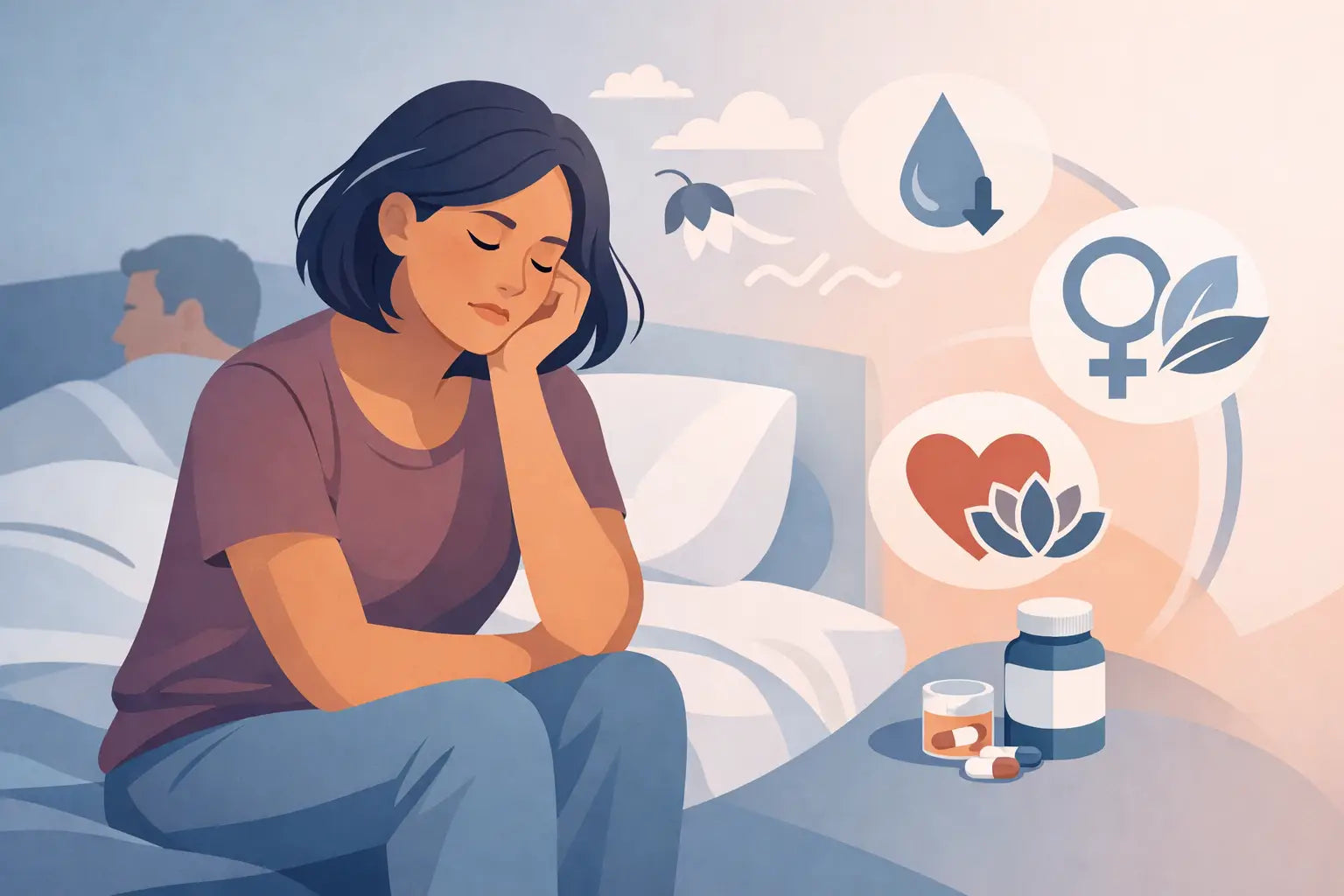
Some women notice it in a quiet moment - they want closeness, but their body seems to answer differently than it used to. Intimacy during perimenopause can feel unfamiliar in ways that are physical, emotional, and deeply personal. That does not mean something is broken. It usually means your body is asking for a new kind of attention.
Perimenopause is a transition, not a personality change. You are still you. But hormone shifts can affect arousal, lubrication, sleep, mood, skin sensitivity, and the way your nervous system responds to stress. For many women, the hardest part is not just the change itself. It is the feeling of disconnection - from your body, from confidence, or from the ease you once had with a partner.
That is why this conversation matters. A more satisfying intimate life during this time rarely comes from pushing harder or pretending nothing has changed. It comes from adjusting with care, naming what is different, and giving yourself permission to want comfort and pleasure at the same time.
Why intimacy during perimenopause can feel different
Sex educator and researcher Emily Nagoski has helped popularize the concept of responsive desire. Rather than appearing suddenly, desire often develops after touch, emotional connection, relaxation, or pleasurable stimulation. For many women in perimenopause, understanding this shift can be deeply reassuring because it reframes changing desire as normal rather than dysfunctional.
Hormonal fluctuations can lower natural lubrication and make vaginal tissue feel thinner, drier, or more sensitive. What once felt pleasurable may now feel irritating, rushed, or simply neutral. Arousal may take longer. Desire may become less spontaneous and more responsive, which means it shows up after touch, emotional connection, or a sense of relaxation rather than out of nowhere.
There is also the mental load. Many women in perimenopause are managing careers, parenting, caregiving, partnership stress, and chronic exhaustion all at once. When your brain is still in problem-solving mode at 9 p.m., your body may not be ready for intimacy just because the day is over. Sleep disruption, anxiety, and body image shifts can quietly narrow the pathway to pleasure.
Consider Sarah, 43: "I still loved my husband and wanted intimacy, but I couldn't understand why my body wasn't responding the way it used to. I thought something was wrong with me. Learning about perimenopause helped me realize I wasn't losing desire—I simply needed more time, less pressure, and a different approach."
This is where nuance matters. Some women feel less interested in sex. Others want intimacy just as much, but need different conditions to enjoy it. Some feel newly curious and more willing to explore because they care less about performance and more about what actually feels good. There is no single perimenopause script.
Start with comfort, not pressure
If intimacy has become inconsistent or tense, pressure tends to make it worse. The more you feel you should want sex in the old way, on the old timeline, the harder it can be to stay present. A gentler starting point is to ask a different question: what helps me feel comfortable enough to become receptive?
That answer may be physical. You might need more lubrication, slower touch, a different position, or more time for your body to warm up. It may also be emotional. Feeling appreciated, less rushed, or more connected outside the bedroom can shape what happens within it.
This is one reason many women benefit from broadening the definition of intimacy. Pleasure does not need to begin with penetration, and closeness does not have to lead there every time. Kissing, massage, mutual touch, skin-to-skin contact, and sensual routines can rebuild trust with your body when things have felt frustrating. Starting smaller often creates more openness, not less.
What actually helps with dryness, sensitivity, and arousal
When discomfort enters the picture, practical support matters. A high-quality lubricant can make a meaningful difference, especially if dryness has become more noticeable. Many women assume discomfort is something to endure or work around, when often it is a sign to add more support and slow the pace.
It also helps to treat arousal as a process, not an on-off switch. Longer foreplay is not a courtesy during perimenopause. For many, it is essential. That might mean more kissing, more external touch, more anticipation, or a setting that feels calm and private rather than rushed and outcome-focused.
Some women also find that solo exploration becomes useful again during this stage. Not because partnership is lacking, but because your body may be changing in subtle ways. Learning what pressure, rhythm, or sensation feels good now can make partnered intimacy feel less uncertain. Thoughtfully designed, body-safe intimacy tools can support that process with elegance and discretion, especially if you want a lower-pressure way to reconnect with sensation.
If pain, burning, or persistent dryness is becoming a pattern, it is worth talking with a qualified healthcare provider. Sometimes the right support includes medical care, especially if symptoms point to vaginal dryness related to hormonal change. Self-compassion and clinical care can belong in the same conversation.
Communication becomes part of the intimacy
One of the more tender parts of perimenopause is that your partner may not know what has changed unless you say it out loud. Many couples fall into silence here. One person worries about rejection. The other worries about disappointing them. Both start making assumptions.
As one sex therapist noted during a women's sexual wellness discussion, "Most couples aren't struggling because they don't care about each other. They're struggling because neither partner fully understands what has changed." Open conversations often reduce anxiety more effectively than assumptions.
A calmer conversation usually works better than trying to explain everything in the middle of an awkward moment. You might say that your body is responding differently, that you still want connection, and that comfort matters more than rushing. Framing it as a shared adjustment rather than a problem to fix can lower defensiveness on both sides.
Specific language helps. Telling a partner that you need more warm-up time, gentler touch, or less goal-oriented intimacy is kinder than expecting them to guess. It can also be surprisingly intimate to say what is working. When something feels good, naming it creates confidence for both of you.
For some couples, this stage can deepen connection. The old assumptions fall away, and intimacy becomes more intentional. For others, it may bring up grief, mismatched desire, or communication habits that have been sitting quietly for years. That does not mean the relationship is failing. It may mean this stage is asking for more honesty than the last one required.
Confidence may need a new definition
A lot of women are carrying an invisible standard about what they think they should feel like in their bodies. Effortless. Spontaneous. Always available. Always confident. Perimenopause has a way of exposing how unrealistic that standard is.
Confidence in this season often looks different. It may be the willingness to ask for lubrication without embarrassment. It may be choosing sensuality over performance. It may be letting go of the idea that intimacy is only successful if it ends a certain way. Real confidence is not pretending nothing has changed. It is trusting that your desires still matter as they evolve.
This is also where self-image deserves some tenderness. Weight shifts, sleep-deprived skin, changes in breast fullness, or a lower tolerance for feeling watched can all affect how present you feel during intimacy. Sometimes the answer is not to force body positivity. Sometimes it is to create conditions that help you feel more at home - softer lighting, better fabrics, a slower pace, a ritual that helps you arrive in your body before expecting pleasure from it.
Rebuilding intimacy during perimenopause, one choice at a time
If intimacy has felt disappointing lately, resist the urge to overhaul everything at once. Small changes are often more sustainable. You might begin with a conversation, then add more time for touch, then try a product that increases comfort, then revisit what pleasure looks like now instead of ten years ago.
It also helps to separate intimacy from obligation. When closeness is treated like another task on an already full list, it loses oxygen. When it is approached as a form of care, curiosity, and connection, it often becomes easier to access. That distinction matters.
For women who are interested in gentle exploration, this season can also be a surprisingly rich time to discover new preferences. Some find they enjoy slower sensory play, more massage, or a stronger emphasis on anticipation and emotional safety. Others become more open to guided experimentation with accessories that feel refined, approachable, and consent-centered. Velora Intima speaks to that kind of discovery - not as performance, but as a way to reconnect with what feels good.
There is no gold standard for how intimacy should look during perimenopause. There is only what feels nourishing, respectful, and true for you. If this season has changed the landscape, that does not mean pleasure is behind you. It may simply mean your body is asking for a more skillful, more compassionate way forward - and that can be its own kind of closeness.
At Velora Intima, we redefine intimacy through wellness, education, and empowerment. From everyday essentials to adventurous exploration and refined luxury, our thoughtfully designed collections create safe, elegant, and empowering spaces for self-discovery and connection.


Read more

Find the best beginner BDSM kit with body-safe essentials, consent-forward guidance, and elegant tools that make first-time exploration feel safe.
Low libido during perimenopause is common, but not something you have to ignore. Learn what causes it, what helps, and how to reconnect.