

Why Am I (Not) Turned On? The Ever-Changing Sexual Accelerators and Brakes
TL;DR
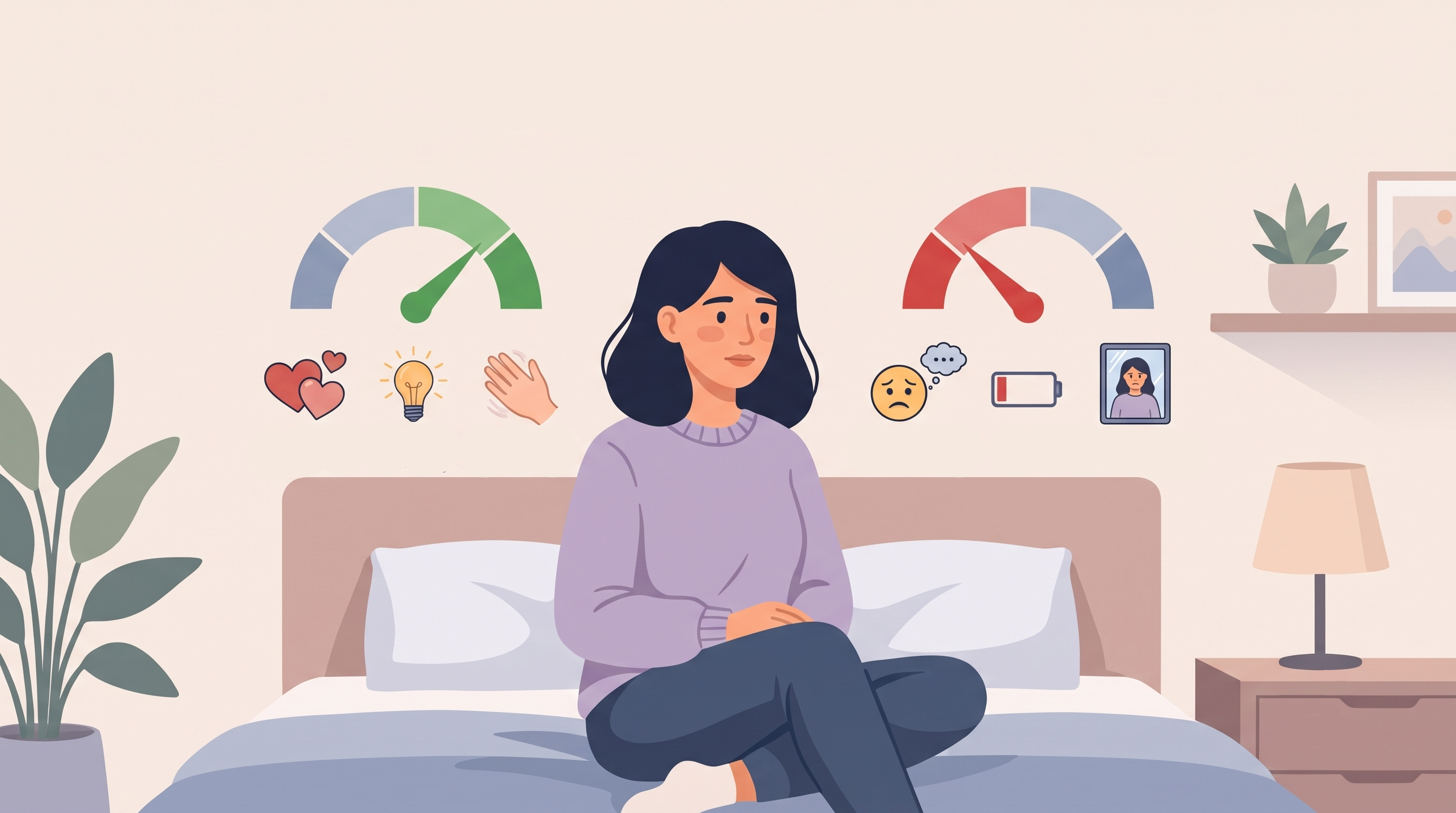
- Sexual desire is influenced by two systems: accelerators that encourage arousal and brakes that reduce or interrupt it.
- Your accelerators and brakes can change from one day or life stage to another because of stress, fatigue, body image, pain, hormones, relationship dynamics and other factors.
- Strong brakes do not mean that you are broken, that you no longer love your partner or that your relationship has failed.
- When desire is low, reducing pressure and understanding what is activating the brakes may be more helpful than adding more stimulation.
Two months after I got married, I learned something about sexual desire that stayed with me for years. One beautiful Friday afternoon, after a romantic date, my husband and I enjoyed intimate time together, including wonderful sex. We agreed to reserve Fridays for each other.
We naturally expected to feel that closeness again the following Friday. Reality could not be further apart. Nothing significant had changed in our relationship. At the time, I held a demanding position at a global consulting firm. I had spent three years working toward a major promotion, and the result was about to be announced.
During that period, I could not think about sex, even though I loved my husband no less.
That experience taught me an important distinction: we can schedule private time, conversation and opportunities for closeness, but we cannot schedule a guaranteed sexual response.
Years later, a therapist introduced me to the Dual Control Model of Sexual Response. Suddenly, my experience made sense.
What Are Sexual Accelerators and Brakes?
The Dual Control Model proposes that sexual response depends on the interaction between two partly independent systems: sexual excitation, or turn-ons, and sexual inhibition, or turn-offs.
Sex educator Emily Nagoski, PhD, uses a helpful metaphor for these systems in her book Come As You Are: an accelerator and brakes.
Your accelerator notices sexual “go” signals, which may include:
- Feeling emotionally connected
- Privacy and the right timing
- A seductive look or loving words
- Certain kinds of touch
- Novelty, fantasy or erotic media
- Feeling desired, accepted and safe
- Playfulness, ambience or anticipation
Your brakes notice reasons not to become sexually engaged, such as:
- Stress, fatigue or lack of sleep
- Pain or physical discomfort
- Fear of pregnancy, infection or injury
- Body-image concerns
- Relationship conflict or resentment
- Feeling rushed, judged or pressured
- Lack of privacy
- Worry about sexual performance
- Shame or negative messages about sex
The Kinsey Institute describes sexual response as a balance between excitatory and inhibitory processes. Their sensitivity varies from person to person, and both systems can be active at the same time.
A 2023 review by researchers Erick Janssen and John Bancroft examined 152 studies published between 2009 and 2022. The review found that sexual excitation was particularly relevant to sexual desire and responsiveness, while sexual inhibition played an important role in sexual difficulties and often interacted with excitation. In other words, our accelerator and brakes do not operate in isolation. Their balance helps shape how we experience desire and respond to different sexual situations.
My therapist helped me understand that I could love my partner while feeling too stressed, exhausted or uncomfortable to want anything sexual.
Your Brakes and Accelerators Keep Changing
Our general tendencies may be fairly consistent, but context changes constantly. A planned evening may feel inviting after a calm day and impossible after an overwhelming one.
Research on women’s sexual arousal has identified physical, emotional, cognitive and relational influences, including body image, negative mood, feeling desired rather than used, feeling accepted by a partner and the way sexual contact is initiated.
A couple of years after the Friday I described, I gave birth to my daughter. Everything went well medically, and my doctor eventually cleared me to resume normal activities. But I did not want sex.
I was exhausted from caring for a five-month-old baby and embarrassed that my body had not returned to its pre-pregnancy shape. My exhaustion and discomfort with my changed body pressed my brakes hard.
One day, my husband asked whether I would stop loving him or wanting to touch him if his belly grew while he cared for our family. I said no. He reminded me that my body had carried our healthy, beautiful baby. To him, it was “our body,” and he loved it more, not less.
His reassurance did not command my body to become sexual. It reduced my shame and helped me feel accepted. One brake began to ease.
Brakes Are Not Bad, and Accelerators Are Not Always Good
Brakes can protect us when a situation feels unsafe, unwanted, or painful. Accelerators can support pleasure, but strong excitation is not automatically good if it encourages someone to overlook consent, consequences or safety.
Sexual Brakes: A Velora Customer Example
With permission, I am sharing an anonymous story from my work at Velora.
A customer contacted us because a toy that had worked beautifully two days earlier suddenly seemed to have “stopped working.” His wife had previously enjoyed it and reached orgasm. Now she did not want to look at or touch it. After a disagreement, sex became completely off the table.
We took the concern seriously and tried to understand what had changed. The product was functioning normally.
After experiencing an intense orgasm with the toy, the wife had become worried that vibration could permanently numb her. Her fear activated her brakes. When she raised the concern with her husband, their different views made the mood more tense, pressing the brakes even harder.
We shared information to address the concern (see Velora’s Blog Clitoral Masturbation: A Guide to Pleasure and Climax to debunk the myth of the Dead Vagina Syndrome) and emphasized that a sex toy should never be used unless everyone involved genuinely wants it. It should not be used to push a partner into a different mood or override reluctance.
We recommended that the husband stop pushing for the toy—or for sex—until his wife wanted to revisit the subject. We also offered them a session with our sex therapist. Eventually, the issue was resolved. More information, less pressure and a calmer context likely helped her brakes begin to release.
A toy may act as an accelerator when someone is already curious and receptive. It may add novelty, variety or sensation, and it may support responsive desire. But it is not a tool for driving through fear, pain, pressure or a “no.”
You Cannot Always Out-Accelerate the Brakes
Couples may respond to low desire by adding more gas: lingerie, date nights, foreplay, toys or stronger stimulation. Sometimes those things help. Sometimes they create more pressure.
One example from Come As You Are involved taking goal-oriented sex off the table. Without pressure to perform or reach a particular outcome, a couple could simply spend intimate time together. Pleasure eventually arose naturally.
The lesson is not that taking sex off the table will secretly guarantee sex. That would create another expectation. The lesson is that pressure itself can be a brake.
Sometimes the best question is not, “How can we create more arousal?” Instead, ask with care, “What is making this moment difficult, and how can I help?”
When Partners Have Different Levels of Desire
Differences in desire are common. Neither partner is automatically right or wrong. The partner who wants more sex may feel rejected or lonely; the partner who wants less may feel pressured or unseen. Both experiences deserve compassion.
Your partner’s active brakes do not necessarily mean they no longer love or desire you. Likewise, wanting more sex does not automatically make someone selfish or abnormal.
Approach it as a team issue:
- Ask what has been weighing on each person lately.
- Listen without immediately defending, fixing or initiating.
- Discuss what sex represents to each of you—connection, pleasure, reassurance, relaxation or feeling wanted.
- Offer affection that does not carry an obligation to continue.
- Reduce practical stress because you care, not as a transaction for sex.
- Create time for connection without promising a sexual outcome.
In my life, I schedule space for conversation and closeness. I do not schedule a requirement that sex—or even touching—must happen.
Try a Personal Desire Audit
Set aside a calm, nonsexual moment and ask:
What Commonly Presses My Brakes?
Consider stress, mental load, pain, interruptions, body image, criticism, fear, boredom or feeling responsible for another person’s orgasm.
What Activates My Accelerator?
Consider emotional closeness, words, fantasy, novelty, privacy, rest, feeling attractive, specific touch, music or unhurried time.
What Changes From Week to Week?
A cue may be an accelerator in one context and a brake in another. Give yourself permission to be inconsistent.
Write down what you notice, then discuss it calmly. Your partner should not have to guess. Share with curiosity rather than blame.
My Final Advice
The goal is not to eliminate anyone’s accelerators or brakes. It is to understand your own system—and your partner’s—well enough to make choices with awareness, consent and kindness.
If low desire is persistent, distressing or accompanied by pain, pelvic discomfort or sudden physical changes, speak with a qualified healthcare professional. Menopause, postpartum recovery, medications, illness and other factors may deserve individualized care.
Desire is not a test of love, a duty or a fixed identity. Your accelerator and brakes respond to your body, your relationship and your life. Accelerators are not always good, brakes are not always bad, and neither partner is wrong for responding differently.
Frequently Asked Questions
What are sexual accelerators and brakes?
Sexual accelerators are the signals that encourage sexual interest, arousal or pleasure. These may include emotional closeness, privacy, novelty, affectionate words, fantasy or certain types of touch.
Sexual brakes are the signals that reduce or interrupt sexual response. Stress, exhaustion, pain, body-image concerns, fear, relationship conflict, pressure and lack of privacy are common examples.
Both systems can be active at the same time.
Why can I want sex one day but not the next?
Sexual desire responds to context. You may have the same partner, the same planned time and even the same type of touch, but your internal and external circumstances may have changed.
A difficult workday, poor sleep, worries about your body, physical discomfort or an unresolved disagreement can activate your brakes. This does not necessarily mean that your attraction or love has changed.
Are sexual brakes always a bad thing?
No. Sexual brakes play an important protective role. They may reduce sexual response when something feels unsafe, painful, unwanted, stressful or risky.
The goal is not to eliminate your brakes. It is to understand what they are responding to and determine whether you need reassurance, communication, rest, medical support or a change in the situation.
Can sex toys help when my sexual brakes are active?
A sex toy may add novelty, curiosity or pleasurable sensation when you genuinely want to use one. It may also support responsive desire when you are open to sexual exploration but have not yet become aroused.
However, a toy should never be used to override fear, discomfort, reluctance or a partner’s “no.” It is an optional accelerator, not a tool for forcing the brakes to release.
How can couples manage different levels of sexual desire?
Begin by recognizing that neither partner is right or wrong. The partner who wants more sex may feel rejected or lonely, while the partner who wants less may feel pressured or inadequate.
Talk during a calm, nonsexual moment about what activates each person’s brakes and accelerators. Offer affection without an expectation that it must lead to sex, reduce practical and emotional pressure, and create opportunities for closeness without requiring a particular outcome.
Persistent or distressing changes in desire, especially when accompanied by pain or other physical symptoms, should be discussed with a qualified healthcare professional.
Sources
- Nagoski, Emily. Come As You Are: Revised and Updated—The Surprising New Science That Will Transform Your Sex Life. Simon & Schuster, 2021.
- Kinsey Institute. “Dual Control Model of Sexual Response.” Indiana University Bloomington. https://kinseyinstitute.org/research/dual-control-model.html
- Janssen, Erick, and John Bancroft. “The Dual Control Model of Sexual Response: A Scoping Review, 2009–2022.” The Journal of Sex Research, vol. 60, no. 7, 2023, pp. 948–968. https://doi.org/10.1080/00224499.2023.2219247.
- Graham, Cynthia A., Stephanie A. Sanders, Robin R. Milhausen and Kimberly R. McBride. “Turning On and Turning Off: A Focus Group Study of the Factors That Affect Women’s Sexual Arousal.” Archives of Sexual Behavior, vol. 33, no. 6, 2004, pp. 527–538. https://doi.org/10.1023/B:ASEB.0000044737.62561.fd
At Velora Intima, we redefine intimacy through wellness, education, and empowerment. From everyday essentials to adventurous exploration and refined luxury, our thoughtfully designed collections create safe, elegant, and empowering spaces for self-discovery and connection.


Read more
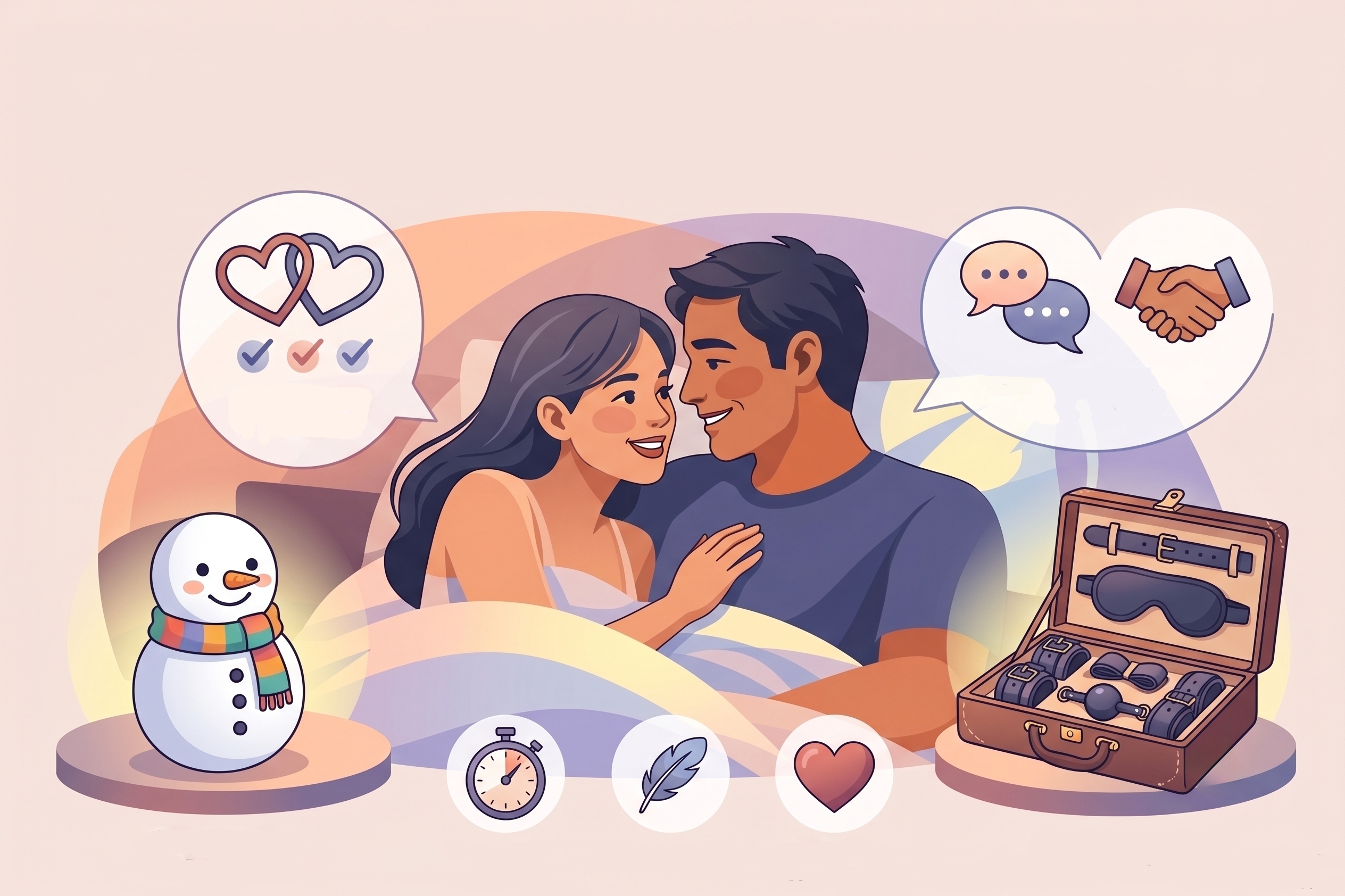
When searching for the best couples’ sex toys, the most important question isn't about finding the strongest motor or the longest feature list—it is about whether the toy will help you and your par...

What does healthy sexuality actually mean? It’s a question that sparked one of the most heartbreaking—and ultimately uplifting—moments in Velora’s history. In our latest post, we share the powerful...